

The system uses Huawei's proprietary dual-path LiDAR architecture, combining two detection units with different focal lengths. This design enables the sensor to simultaneously detect dist ant objects and monitor a wide field of view close to the vehicle.
Company data indicates the sensor can identify objects as small as 14 centimeters from a distance of 120 meters. Huawei said the higher-resolution perception allows vehicles to detect and avoid smaller obstacles, including debris on the road, while traveling at higher speeds.
The LiDAR also delivers a point-cloud density per frame roughly seven times higher than that of widely used 128-channel sensors, which Huawei said improves perception stability during challenging conditions such as rain or fog.
Chinese media outlet Cailian reported that the new 896-channel LiDAR will also be deployed across other brands within the Harmony Intelligent Mobility Alliance as well as additional models developed with Huawei's automotive partners.
The rollout comes as Huawei-backed vehicle brands expand in China's premium electric vehicle segment, a market historically dominated by European luxury automakers.
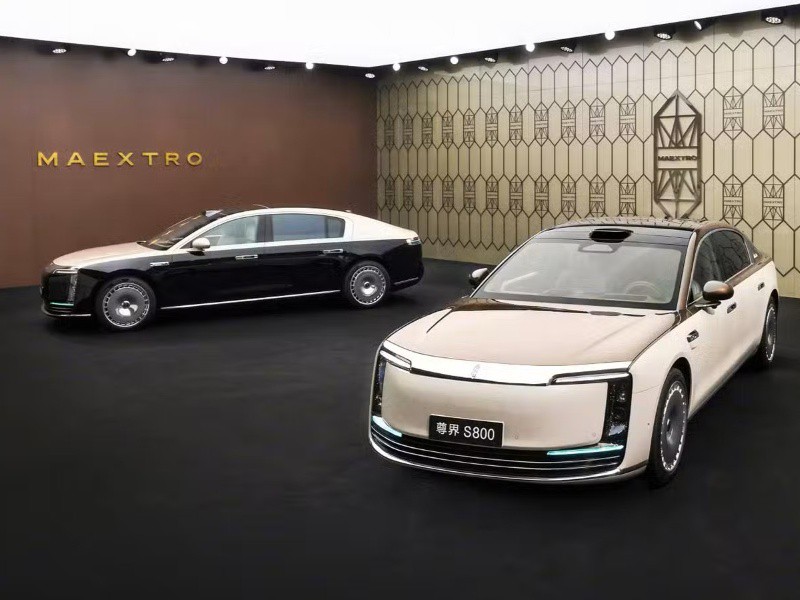
Richard Yu said the Maextro S800 delivered about 15,000 units within nine months of its launch, and that insurance registration data between September 2025 and January 2026 showed the model surpassing the Porsche Panamera and Mercedes-Benz S-Class in the same period.
The Aito M9 has also seen strong demand, with cumulative deliveries exceeding 280,000 units as of March 3, according to Yu, placing the model among the leading vehicles in China's large luxury SUV category.
Competition among suppliers of autonomous driving hardware has intensified as automakers increase the use of advanced sensing technologies. Chinese LiDAR manufacturers such as RoboSense Technology and Hesai Group have also introduced sensors with around 1,000 channels as part of a broader push toward higher-precision vehicle perception systems.