

GAC-Toyota said its bZ7 all-electric sedan will officially launch in March, with pricing expected to start in the 200,000 yuan ($29,000) range, as the joint venture expands its electric vehicle lineup in China's highly competitive mid-to-large sedan segment.
The bZ7 is among the first production vehicles in China to integrate with the Xiaomi smart ecosystem and will run on HarmonyOS 5.0, developed by Huawei. The model is also equipped with the Momenta R6 Flywheel AI model for advanced driver assistance and Huawei's DriveONE electric motor system, according to specifications released by the company.
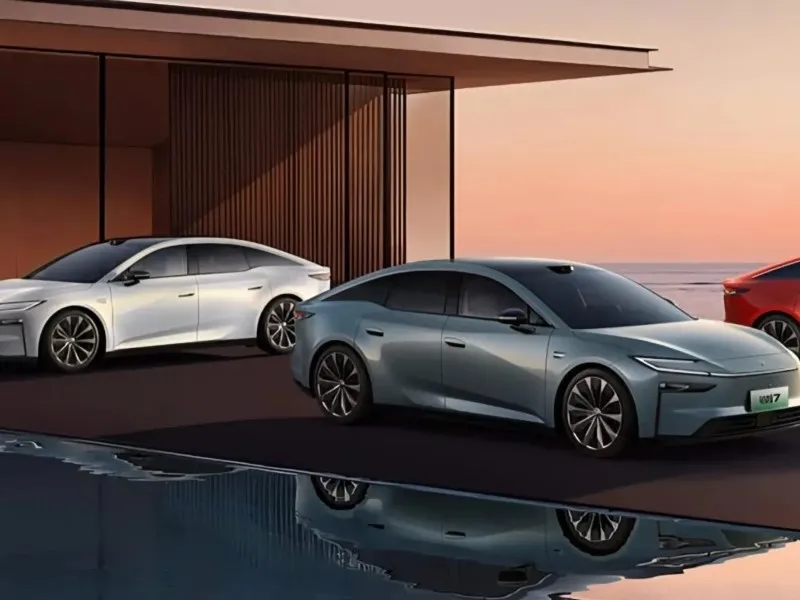
Externally, the GAC-Toyota bZ7 features a fastback profile, Toyota's C-shaped daytime running lights and a full-width front light strip. A roof-mounted lidar unit is integrated into the design, with a matching full-width taillight at the rear. The sedan also includes a segmented panoramic sunroof.
For driver assistance, the bZ7 is equipped with one roof lidar, five millimeter-wave radars, 11 cameras and 10 ultrasonic radars, supported by an autonomous driving chip from Nvidia. The Momenta R6 system enables urban and highway navigation-on-autopilot functions, as well as remote and fully automated parking assistance.
The bZ7 uses lithium iron phosphate batteries supplied by CATL, with capacities of 71.35 kWh and 88.13 kWh. Powered by a dual-motor DriveONE system delivering up to 207 kW (278 hp), the sedan has a top speed of 180 km/h. Under the CLTC standard, the larger battery offers driving ranges of up to 710 km, while the smaller pack delivers up to 600 km.
Inside, the cockpit features a 15.6-inch floating central touchscreen, a digital instrument cluster and a head-up display, all running HarmonyOS 5.0 as standard. Additional features include 50-watt wireless charging pads for front and rear passengers, an onboard refrigerator, smartphone-based remote vehicle control and a 23-speaker audio system.