

Founded in 2014 and headquartered in Shanghai city, Shanghai Yuecheng Automobile Sales Co.,limited is currently engaged in real estate, automobile, industrial manufacturing and construction, with more than 20 subsidiaries as of the end of 2023.
A Wide Variety of Electric Vehicles
Our electric vehicle product types are diverse, including BEV, HEV, HPEV, REEV.
Many Brands
We provide you with brands including TOYOTA, VOLKSWAGEN, GEELY, BYD, WULING, CHANGN, LIXIANG, XIAOMI, etc.
OEM & ODM Available
We are leading OEM and OES parts export service provider, we support many types of OEM services. If you have any related needs, please contact us.
Quick Response
Our commitment is to respond to your inquiries within 24 hours, ensuring that you receive the information and support you require in a timely manner.
-
![Luxury SUV HPrice]()
-
![PRADO Luxury SUV High Valued]()
-
![Luxury SUV High Valued]()
-
![Hybrid Land Cruiser Prado WX 2.8T]() Hybrid Land Cruiser Prado WX 2.8TToyota Hybrid Land Cruiser Prado WX 2.8T. Manufacturer:TOYOYA. Model:2024 PRADO. Edition:BX editionread more
Hybrid Land Cruiser Prado WX 2.8TToyota Hybrid Land Cruiser Prado WX 2.8T. Manufacturer:TOYOYA. Model:2024 PRADO. Edition:BX editionread more -
![Toyota Self Charging Hybrid]()
-
![2025 Toyota Rav4 Hybrid Price]() 2025 Toyota Rav4 Hybrid PriceManufacturer:TOYOYA. Model:2023 RAV 4. Edition:2WD style editionread more
2025 Toyota Rav4 Hybrid PriceManufacturer:TOYOYA. Model:2023 RAV 4. Edition:2WD style editionread more -
![Toyota Hybrid Electric]()
-
![Toyota Hybrid Electric Suv]() Toyota Hybrid Electric Suv2024 Best Selling Toyota Hybrid Electric Suv Prado Hybrid Vehicle With High Performance. Manufacturer:TOYOYA. Model:2024 PRADO. Medium and large SUV vehicle. Edition:BX editionread more
Toyota Hybrid Electric Suv2024 Best Selling Toyota Hybrid Electric Suv Prado Hybrid Vehicle With High Performance. Manufacturer:TOYOYA. Model:2024 PRADO. Medium and large SUV vehicle. Edition:BX editionread more -
![HIGHLANDER]() HIGHLANDERThe Toyota Highlander is a versatile and reliable mid-size SUV that caters to families and individuals seeking a comfortable, safe, and spacious vehicle.read more
HIGHLANDERThe Toyota Highlander is a versatile and reliable mid-size SUV that caters to families and individuals seeking a comfortable, safe, and spacious vehicle.read more -
![TOYOTA FRONTLANDER]() TOYOTA FRONTLANDERThe Toyota Frontlander, also known as the Corolla Cross in some markets, is a compact crossover SUV. It blends the reliability and efficiency that Toyota is known for with a stylish and versatileread more
TOYOTA FRONTLANDERThe Toyota Frontlander, also known as the Corolla Cross in some markets, is a compact crossover SUV. It blends the reliability and efficiency that Toyota is known for with a stylish and versatileread more -
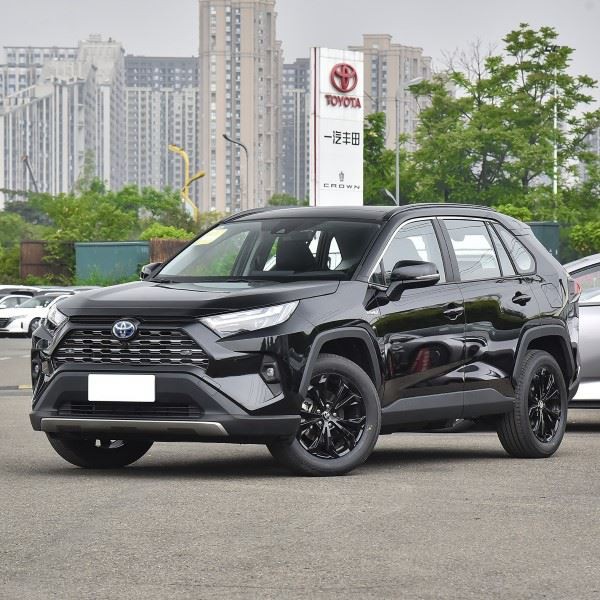
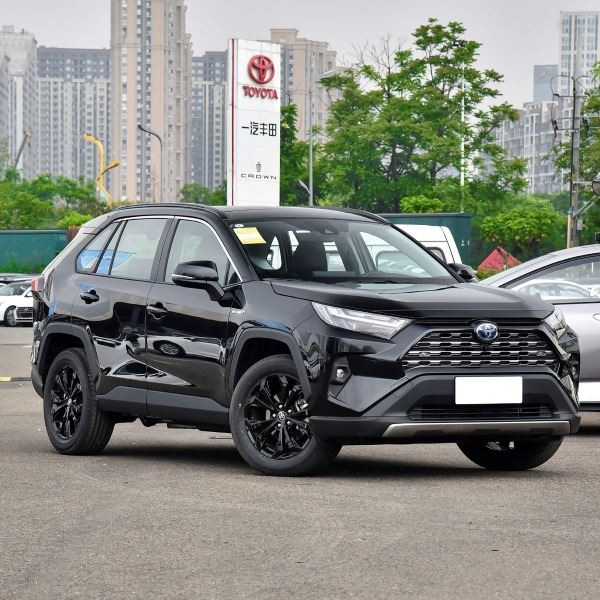
![RAV 4 HYBRID]() RAV 4 HYBRIDThe RAV4 Hybrid is a pioneering crossover hybrid electric SUV vehicle that blends Toyota's legendary reliability with eco-friendly hybrid technology, delivering exceptional fuel efficiency,read more
RAV 4 HYBRIDThe RAV4 Hybrid is a pioneering crossover hybrid electric SUV vehicle that blends Toyota's legendary reliability with eco-friendly hybrid technology, delivering exceptional fuel efficiency,read more -
![COROLLA CROSS]() COROLLA CROSSThe Corolla Cross is Toyota's innovative crossover hybrid electric SUV vehicle that merges the iconic Corolla's reliability with the versatility of a compact SUV. This dynamic vehicle is designed toread more
COROLLA CROSSThe Corolla Cross is Toyota's innovative crossover hybrid electric SUV vehicle that merges the iconic Corolla's reliability with the versatility of a compact SUV. This dynamic vehicle is designed toread more


What is Hybrid Electric Vehicle
Today's hybrid electric vehicles (HEVs) are powered by an internal combustion engine in combination with one or more electric motors that use energy stored in batteries. HEVs combine the benefits of high fuel economy and low tailpipe emissions with the power and range of conventional vehicles. If you want to know the specifications and prices of Hybrid Electric Vehicle, please contact us!
Advantages of Hybrid Electric Vehicle
Fuel Economy
Hybrid cars are proven to be more fuel efficient than conventional petrol/diesel vehicles due to improvements in weight reduction, aerodynamics and a smaller engine. Hybrid cars will also run purely on the electric motor whenever possible, which makes a large impact on the car's fuel economy.
Require Less Maintenance
Hybrid cars require less maintenance than traditional gas-powered cars, as hybrids are designed to last longer and run better than gas-powered cars. They have fewer parts, which means they require less maintenance than a traditional car.
Light Materials
- Hybrid cars are made up of lighter materials and the engine is significantly smaller and lighter so that less energy is required to run the vehicle.
- The petrol engine used in hybrid cars is smaller and lighter as they aren't solely responsible for powering the car because there's an electric motor to support powering the car.
A More Reliable Fuel Type
In a recent Which? Car Survey on Hybrid Car Reliability, Hybrid cars were found to be the most reliable by fuel type by having fewer faults. This is because hybrid models are mechanically simpler and have fewer parts than other car types, which keeps their fault percentage much lower.
Good Resale Value
- Hybrid cars often have a higher resale value compared to petrol/diesel cars because they achieve a higher gas mileage.
- Similarly to petrol/diesel cars, the value of a hybrid car will depreciate, but its resale value will typically be higher because of less maintenance being required and its higher gas mileage.
More Environmentally-Friendly
Hybrid vehicles are often admired for being more "green" in comparison to traditional gas vehicles. Here are some ways hybrid vehicles can reduce your carbon footprint and have more advantages over traditional gas cars:
Less CO2 emissions: Traditional gas vehicles release emissions from their tailpipes, causing a lot of harm to the environment. In comparison, hybrids are more fuel efficient and save more energy, which means they give off fewer carbon emissions.
Better fuel efficiency: Since hybrid vehicles don't only rely on their gas engines to stay in motion, they require less fuel giving them better efficiency.
Regenerative braking: When you use the brakes in most hybrid vehicles, they generate energy that's converted into recharging your high voltage car battery. This cool feature can help your vehicle to use less fuel as you drive.
"Range Anxiety" May Not Be a Problem
- Range anxiety, or the fear that you won't have enough charge to make it from point A to point B, is a common concern amongst battery-only electric vehicle owners. Currently, charging stations are being built around the U.S, but they may still be few and far between depending on where you live.
- Range anxiety is not a common concern amongst hybrid or PHEV drivers. When the high voltage battery runs low on charge in a hybrid vehicle, the car will rely more on the ICE. This automatic switch can be much more comforting since gas stations are more readily available.
Mild Hybrids
One of the newest innovations in hybrid technology is that of a "mild" hybrid system. Like the name implies, a mild hybrid system typically isn't going to propel the vehicle on electric power alone. Instead, the system is used to give a small boost to the vehicle's gasoline engine, typically upon acceleration from a dead stop, and to assist in removing the burden of power-hungry systems, such as air conditioning, on the gasoline engine. Normally found in the form of 48 volt electric systems, mild hybrids do not need to be plugged in. Instead, the batteries are recharged through a combination of power from the gasoline engine, and energy recovered when the vehicle brakes (also known as regenerative braking).
Full Hybrids
- Like mild hybrids, full hybrid vehicles also come equipped with both a gasoline engine and an electrical component. However, the electrical component in a full hybrid vehicle is capable of handling far more of the workload than that of a mild hybrid. Most full hybrids can actually operate for some distance solely on electric power. This typically happens at lower city speeds, but is one reason why you may see a full hybrid's City MPG rating higher than its Highway MPG rating (where in standard gasoline-powered vehicles, the opposite is true).
- When it comes to full hybrid vehicles, there are two main types of powertrains; Parallel hybrids and Series hybrids.
- With Parallel hybrids, the engine can be powered in one of 3 ways: directly by the engine, directly by the electrical motor, or by both systems working together.
- In a Series hybrid, the wheels are powered solely via the electric motor, with the gasoline-engine providing power for the electric motor, sort of like a generator. The gasoline-engine never actually powers the wheels.
- With advances in hybrid technology, some vehicles operate as a combination of the two (aptly named "series-parallel" hybrids), with the on-board computer system choosing the most efficient way to operate at any given time.
- Full hybrids charge their battery system in essentially the same way as mild hybrid systems, through energy from the gasoline engine as well as regenerative braking.
Plug-In Hybrids
All of the hybrid vehicles that we have discussed thus far charge their batteries solely through internal means. The main difference with plug-in hybrids is that these vehicles can charge their batteries via external chargers as well as internal. As a result, plug-in hybrids usually have greater electric-only ranges than full hybrids. Plug-In hybrids essentially serve as a half-way point between full hybrid vehicles and fully electric vehicles.
Electric Vehicles with Range Extender Hybrids
While all-electric vehicles technically don't qualify as hybrids, there are some that come equipped with a small gasoline engine to provide a cushion when needed. When an electric vehicle runs out of power, the vehicle will need to be charged before it becomes operational again. These range extender hybrids utilize their gasoline engine to charge the battery or power the electric motor so that you're not left stranded. Depending on the size of the gasoline engine, this can mean anywhere from a few dozen miles to hundreds.
How to Maintain Hybrid Electric Vehicle


Prioritize EV Battery Care
- Your electric car's high-voltage battery pack is probably the most essential component of your entire vehicle. Not only is it the power source of your EV, but it also saves you money by omitting fuel stops (in some EVs). Therefore, the battery pack should be top of mind.
- Don't overcharge your battery: Unless you're driving for an extended amount of time, there's no need to charge your battery to 100 percent. Although this may feel counterintuitive, consistently charging your EV's battery to its max may cause it to wear at a faster rate. Ideally, you'll want to keep your battery pack's charge in the 20 percent to 80 percent range.
- Don't undercharge your battery for extended periods: Avoid leaving your EV's battery with little to no charge for long periods of time. Doing so may also affect your car battery's health and cause degradation at a faster rate. Try keeping your battery's charge at no less than 20% on a regular basis.
- Pay attention to where you park: Heat can eventually wreak havoc on your EV's battery performance, while low temperatures can lower your battery's range. Look for covered parking during extreme weather conditions to help your battery pack stay in the best shape possible. Your high-voltage battery pack may also have its own cooling system, which could require occasional inspection and maintenance.
Change the Oil (if Needed)
- Do electric vehicles use oil? It depends, particularly on what type of electric car you have. A plug-in hybrid electric vehicle (PHEV) with a combustion engine will need occasional oil changes and cooling system and fuel and air intake system inspections.
- If you can't change the oil yourself, a Firestone Complete Auto Care technician can advise you on your electric car's oil change schedule, the type of oil that's best for your ride, and more.
Maintain Your Brakes
- The kinetic energy that EV regenerative braking systems use creates electricity. This conversion of energy provides your battery pack with more power. However, EVs (and hybrids) with regenerative braking systems still have conventional friction brakes with brake fluid, rotors, pads, drums, shoes, etc.
- The regenerative brakes and conventional friction brakes work in parallel on your EV. And similar to standard vehicles, getting conventional brake inspections should be a regular part of your EV's scheduled maintenance.
Get Regular Tire Rotations
- Getting regular tire rotations may help to reduce tire wear, ensure even tread depth across all four tires, and potentially keep money in your pocket by minimizing frequent tire replacements. All of which is why you should continue to perform tire rotations for your ride.
- Tire rotation schedules for EVs are often similar to those of gas or hybrid vehicles: about every 6,000 miles. But you'll want to follow your manufacturer's suggested maintenance schedule for a more vehicle-specific timeline.
- In addition to tire rotations, maintaining the appropriate pressure, wheel alignment, and balance of your tires may help to sustain performance and longevity.
Inspect/Refill Fluids When Needed
- Your hybrid or electric car may still have an engine, which could require oil changes and cooling system inspections. It may not have a traditional automatic transmission, but it likely has a gear reduction 'transmission' or gearbox containing lubricant.
- The high-voltage power electronics and electric motors are typically cooled by a separate cooling system. The high-voltage battery pack is typically cooled as well, and that system may use air from the passenger cabin, an air conditioning system, or even use another coolant circulating system. You'll still want to keep an eye on the brake and windshield wiper fluid. All service schedules can be found in your car's owner's manual.
Keep An Eye On Your Tyres
- Good tyre maintenance is a given for anything with four wheels, but it's especially important if you really want to see the benefits of owning a hybrid car. Maintaining correct tyre pressure is one of the keys to fuel efficiency.
- Even if you drive the latest hybrid car boasting top-of-the-range fuel economy, having your tyres over- or under-inflated can compromise on performance. You should also make sure you have the right tyres fitted for your car.
- Hybrids vehicles are known to have lower rolling resistance than traditional models, so make sure you check with your car service centre that you have the best tyres for your hybrid.
Get to Know the Battery
- The battery should always be near the top of your car maintenance checklist, especially if you own a hybrid car. As these vehicles depend heavily on electricity to run, it's even more important to keep the battery in top condition.
- Give your battery extra attention in cold weather - although this is unlikely to be a major problem in sunny Brisbane! The batteries in hybrid cars work best when warm, so make sure you get it warmed up sufficiently before setting out on a particularly chilly day.
- Cold weather can also affect the battery's charge. Make sure you keep a decent charge on it at all times, and never let it drain out. The battery is designed to last pretty much most of the car's life - around ten years - so you should get plenty of activity out of it before getting it replaced.
Certificate


Frequently Asked Questions
We're professional hybrid electric vehicle manufacturers and suppliers in China, specialized in providing high quality products and service. If you're going to buy discount hybrid electric vehicle, welcome to get quotation from our factory.