

Amazon's autonomous vehicle subsidiary, Zoox, is accelerating its push into the competitive U.S. robotaxi market with a significant expansion of its service and testing footprint. The company announced plans to grow its commercial operations in San Francisco and Las Vegas while initiating a crucial testing phase for its unique, purpose-built vehicles in Austin and Miami.
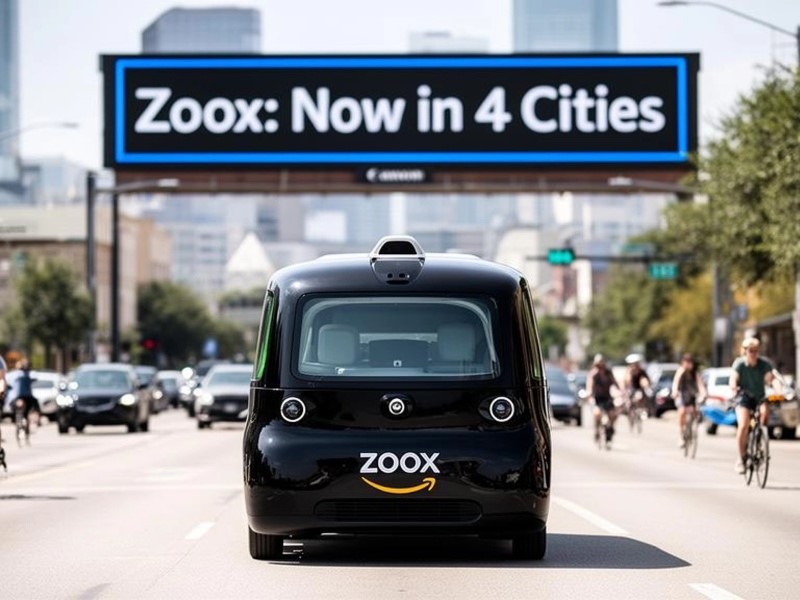
This multi-city strategy represents Zoox's most aggressive move yet to challenge established players like Alphabet's Waymo and Tesla in the race to deploy autonomous ride-hailing services at scale. The expansion comes as the company reports it has accumulated nearly 2 million autonomous miles and transported over 350,000 passengers since launching its customer service.
In San Francisco, a key battleground for robotaxi services, Zoox plans to quadruple the size of its service area. The expansion will focus on dense, high-demand neighborhoods including the Marina, North Beach, Chinatown, Pacific Heights, and along the Embarcadero. This move significantly increases its coverage to include the eastern half of the city, putting it in more direct competition with rivals operating in the same urban core.
Las Vegas will see a parallel expansion, with Zoox adding major new destinations to its approved pickup and drop-off network. The service will now include the Las Vegas Convention Center and a majority of the major hotels along the iconic Strip. High-traffic entertainment venues like the Sphere and T-Mobile Arena are also slated to be added soon, broadening the service's appeal to tourists and convention-goers.
Perhaps the most strategically important part of the announcement involves the company's entry into two new metropolitan markets. Zoox will begin operating its purpose-built robotaxis on public roads in Austin, Texas, and Miami, Florida. Initially, rides will be limited to employees, their families, and friends-a common industry practice for gathering real-world data in new environments. The company stated it plans to gradually open the service to the public later this year.
Zoox distinguishes itself in the crowded autonomous vehicle sector through its vehicle design. Unlike most competitors that retrofit existing car models, Zoox uses a custom-built, bidirectional vehicle that lacks traditional driving controls like a steering wheel or pedals. The interior features bench seats positioned on either side, allowing passengers to face each other. The exterior is densely packed with sensors, including cameras, lidar, and radar. These vehicles are currently limited to speeds not exceeding 45 miles per hour.