

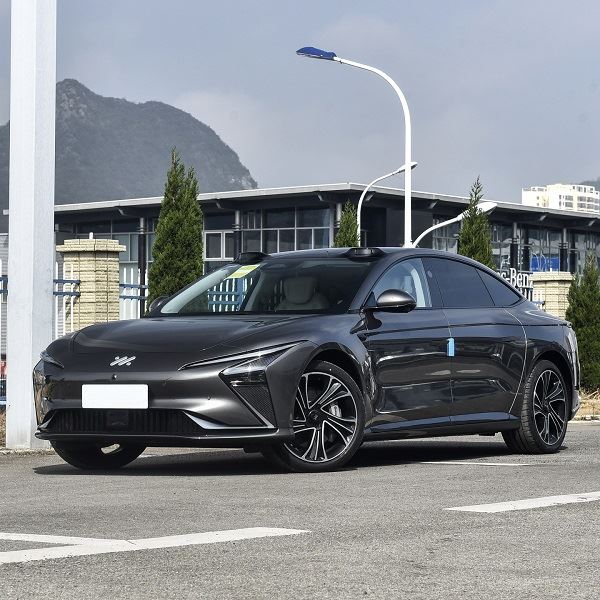
As a supplier of IM pure electric vehicles, one of the most frequently asked questions from potential customers is about the charging time for different battery capacities. Understanding this aspect is crucial as it directly impacts the vehicle's usability and convenience. In this blog, I'll delve into the charging times of various battery capacities in IM pure electric vehicles, including models like IM LS6, IM L7, and IM L6.
Factors Affecting Charging Time
Before we discuss the specific charging times, it's important to understand the factors that influence how long it takes to charge an electric vehicle (EV). These factors include:
- Battery Capacity: The larger the battery capacity, the more energy it can store, and generally, the longer it takes to charge. Battery capacity is typically measured in kilowatt - hours (kWh).
- Charging Power: Charging power is measured in kilowatts (kW). Higher charging power means the battery can accept more energy per unit of time, resulting in faster charging. There are different levels of charging, including slow charging (Level 1), fast charging (Level 2), and DC fast charging.
- State of Charge (SOC): The initial state of charge of the battery also affects charging time. Charging from a low SOC to a high SOC is not a linear process. As the battery approaches full charge, the charging speed often slows down to protect the battery's health.
- Battery Chemistry and Temperature: Different battery chemistries have different charging characteristics. Additionally, battery temperature can significantly impact charging speed. Extreme cold or hot temperatures can slow down the charging process.
Charging Levels and Their Characteristics
Let's briefly look at the different charging levels available for IM pure electric vehicles:
- Level 1 Charging: This is the slowest form of charging and typically uses a standard 120 - volt household outlet. The charging power is usually around 1.4 - 2.4 kW. Level 1 charging is convenient for overnight charging at home but is not suitable for quick top - ups.
- Level 2 Charging: Level 2 chargers use a 240 - volt outlet, similar to those used for large appliances like dryers. The charging power can range from 3.3 kW to 19.2 kW. Level 2 chargers are commonly found at home charging stations and public charging points.
- DC Fast Charging: DC fast chargers can provide high - power charging, typically ranging from 50 kW to over 350 kW. These chargers are usually located at public charging stations along highways and are designed for rapid charging during long - distance travel.
Charging Time for Different IM Pure Electric Vehicle Models
IM LS6
The IM LS6 comes with different battery capacity options to meet various customer needs. Suppose the IM LS6 is available with a 75 kWh and a 100 kWh battery.
- Level 1 Charging: With a 1.4 kW Level 1 charger, the 75 kWh battery would take approximately 53.6 hours (75 kWh / 1.4 kW) to charge from 0% to 100%. For the 100 kWh battery, it would take around 71.4 hours (100 kWh / 1.4 kW).
- Level 2 Charging: If we use a 7.2 kW Level 2 charger, the 75 kWh battery would take about 10.4 hours (75 kWh / 7.2 kW), and the 100 kWh battery would take around 13.9 hours (100 kWh / 7.2 kW).
- DC Fast Charging: Assuming a DC fast charger with a power of 150 kW, the 75 kWh battery could be charged from 10% to 80% in approximately 22 minutes. This is because the charging speed slows down as the battery approaches full charge. For the 100 kWh battery, the 10% - 80% charge could take around 29 minutes.
IM L7
The IM L7 is another popular model in our lineup. Let's assume it has a 90 kWh and a 110 kWh battery option.
- Level 1 Charging: Using a 1.4 kW charger, the 90 kWh battery would need about 64.3 hours (90 kWh / 1.4 kW), and the 110 kWh battery would take around 78.6 hours (110 kWh / 1.4 kW) to charge from 0% to 100%.
- Level 2 Charging: With a 7.2 kW Level 2 charger, the 90 kWh battery would take approximately 12.5 hours (90 kWh / 7.2 kW), and the 110 kWh battery would take around 15.3 hours (110 kWh / 7.2 kW).
- DC Fast Charging: With a 200 kW DC fast charger, the 90 kWh battery could be charged from 10% to 80% in about 20 minutes, while the 110 kWh battery might take around 24 minutes.
IM L6
The IM L6 offers battery capacities of 60 kWh and 80 kWh.
- Level 1 Charging: A 1.4 kW charger would take about 42.9 hours (60 kWh / 1.4 kW) for the 60 kWh battery and 57.1 hours (80 kWh / 1.4 kW) for the 80 kWh battery to reach 100% from 0%.
- Level 2 Charging: Using a 7.2 kW Level 2 charger, the 60 kWh battery would need around 8.3 hours (60 kWh / 7.2 kW), and the 80 kWh battery would take approximately 11.1 hours (80 kWh / 7.2 kW).
- DC Fast Charging: With a 120 kW DC fast charger, the 60 kWh battery could be charged from 10% to 80% in about 18 minutes, and the 80 kWh battery might take around 23 minutes.
Strategies to Reduce Charging Time
While the charging time is influenced by the battery capacity and the charging infrastructure, there are some strategies that can help reduce the overall charging time:

- Use High - Power Chargers: Whenever possible, use DC fast chargers for long - distance travel or when you need a quick top - up. These chargers can significantly reduce the charging time compared to Level 1 and Level 2 chargers.
- Plan Charging Stops: When planning a long - distance trip, plan your charging stops in advance. Look for charging stations with high - power chargers along your route.
- Optimize Battery Temperature: In extreme weather conditions, try to park your vehicle in a shaded area in hot weather or use pre - conditioning to warm up the battery in cold weather. This can help maintain an optimal battery temperature for faster charging.
Conclusion
Understanding the charging time for different battery capacities in IM pure electric vehicles is essential for making an informed purchasing decision. As a supplier, we are committed to providing our customers with high - quality vehicles that offer a balance between battery capacity, charging speed, and range. Whether you choose the IM LS6, IM L7, or IM L6, you can expect reliable performance and efficient charging.
If you are interested in purchasing IM pure electric vehicles for your personal use or for your business fleet, we encourage you to contact us for a detailed discussion about our products and services. We look forward to partnering with you to make the transition to electric vehicles seamless and rewarding.
References
- Electric Vehicle Charging Basics, U.S. Department of Energy.
- Battery Technology and Charging Characteristics, SAE International.