

As a proud supplier for Toyota pure electric vehicles, I've had the privilege of delving deep into the intricate technologies that power these remarkable machines. One of the most crucial aspects of any vehicle, especially electric ones, is the stability control system. In this blog, I'll take you through how the stability control system works in Toyota pure electric vehicles.
Understanding the Basics of Stability Control
Before we jump into the specifics of Toyota's system, let's understand what a stability control system is and why it's so important. A stability control system, often abbreviated as ESC (Electronic Stability Control), is designed to help drivers maintain control of their vehicles in challenging driving conditions. It uses a combination of sensors, processors, and actuators to detect when a vehicle is starting to lose traction or stability and then takes corrective actions to prevent skidding or rolling over.
In a pure electric vehicle like those produced by Toyota, the stability control system plays an even more critical role. Electric vehicles have instant torque delivery, which means that they can accelerate very quickly. While this is great for performance, it also means that there is a higher risk of losing control if the driver isn't careful. Additionally, the battery packs in electric vehicles are heavy, which can affect the vehicle's handling and balance.
The Components of Toyota's Stability Control System
Toyota's stability control system is a complex network of sensors, controllers, and actuators that work together to keep the vehicle stable. Let's take a closer look at each of these components:
Sensors
The first step in any stability control system is to gather data about the vehicle's motion. Toyota uses a variety of sensors to do this, including:
- Wheel Speed Sensors: These sensors measure the speed of each wheel. By comparing the speeds of the wheels, the system can detect if one or more wheels are slipping.
- Steering Angle Sensor: This sensor measures the angle of the steering wheel. It helps the system determine the driver's intended direction of travel.
- Yaw Rate Sensor: This sensor measures the vehicle's rotation around its vertical axis. It can detect if the vehicle is starting to spin or skid.
- Lateral Acceleration Sensor: This sensor measures the vehicle's acceleration in the side-to-side direction. It helps the system detect if the vehicle is starting to slide.
Controllers
Once the sensors have gathered the data, it is sent to the vehicle's electronic control unit (ECU). The ECU is the brain of the stability control system. It processes the data from the sensors and determines if the vehicle is stable or if corrective action is needed.
The ECU uses a sophisticated algorithm to analyze the data. It compares the actual motion of the vehicle with the driver's intended motion (as determined by the steering angle sensor). If there is a significant difference between the two, the ECU will activate the stability control system.
Actuators
If the ECU determines that the vehicle is starting to lose stability, it will send signals to the actuators to take corrective action. The actuators in Toyota's stability control system include:
- Brake Actuators: These actuators can apply the brakes to individual wheels. By applying the brakes to one or more wheels, the system can help to slow down the vehicle and correct its path.
- Motor Control Unit: In a pure electric vehicle, the motor control unit can also be used to adjust the torque output of the electric motor. By reducing the torque to one or more wheels, the system can help to prevent wheel slip.
How Toyota's Stability Control System Works in Action
Now that we understand the components of Toyota's stability control system, let's take a look at how it works in action. Here's a step-by-step breakdown of what happens when the system detects that the vehicle is starting to lose stability:
Detection
The sensors in the vehicle continuously monitor the vehicle's motion. If they detect that one or more wheels are slipping, or if the vehicle is starting to spin or skid, they will send signals to the ECU.
Analysis
The ECU receives the data from the sensors and analyzes it using its algorithm. It compares the actual motion of the vehicle with the driver's intended motion. If there is a significant difference between the two, the ECU will determine that the vehicle is starting to lose stability.
Intervention
Once the ECU has determined that the vehicle is starting to lose stability, it will send signals to the actuators to take corrective action. For example, if the system detects that the vehicle is starting to oversteer (the rear end is sliding out), it may apply the brakes to the front outer wheel and reduce the torque to the rear wheels. This will help to bring the vehicle back under control.
Monitoring
Even after the corrective action has been taken, the system will continue to monitor the vehicle's motion. It will make sure that the vehicle is stable and that the driver has regained control. If the system detects that the vehicle is still unstable, it may take further corrective action.
The Benefits of Toyota's Stability Control System
Toyota's stability control system offers several benefits for drivers of pure electric vehicles. Here are some of the key benefits:
- Enhanced Safety: The primary benefit of the stability control system is enhanced safety. By helping to prevent skidding and rolling over, the system can reduce the risk of accidents.
- Improved Handling: The system can also improve the vehicle's handling. It can help to keep the vehicle stable in challenging driving conditions, such as on wet or slippery roads.
- Better Performance: In a pure electric vehicle, the stability control system can also help to improve performance. By preventing wheel slip, the system can allow the vehicle to accelerate more efficiently.
Real-World Examples
To illustrate the effectiveness of Toyota's stability control system, let's take a look at some real-world examples.
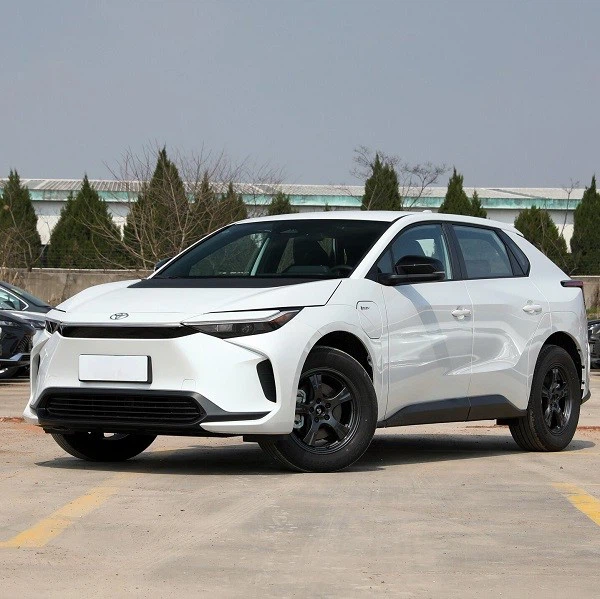
One example is the TOYOTA BZ4X. This is Toyota's first all-electric SUV. The BZ4X is equipped with Toyota's latest stability control system, which helps to keep the vehicle stable in a variety of driving conditions. Whether you're driving on a wet road or taking a sharp turn, the stability control system will work to keep you safe.
Another example is the BZ4X Electric Car 500 - 600km Range. This vehicle has a long range, which means that you can take it on longer trips. However, long trips often involve driving in different weather conditions and on different types of roads. The stability control system in the BZ4X helps to ensure that you can drive safely no matter where you're going.
Conclusion
In conclusion, Toyota's stability control system is a sophisticated technology that plays a crucial role in the safety and performance of its pure electric vehicles. By using a combination of sensors, controllers, and actuators, the system can detect when a vehicle is starting to lose stability and take corrective action to prevent accidents.
If you're in the market for a pure electric vehicle, I highly recommend considering a Toyota. Toyota's commitment to safety and innovation is evident in its stability control system. And if you're interested in learning more about our products or are looking to start a procurement discussion, please don't hesitate to reach out. We're always happy to talk to potential partners and customers.
If you want to explore more Toyota pure electric vehicles, you can visit Electric Cars Available Now.

References
- Toyota Motor Corporation. (2023). Toyota Safety Sense: A Comprehensive Approach to Vehicle Safety.
- Society of Automotive Engineers. (2022). Electronic Stability Control Systems: Principles and Applications.